Gabriel Ramos
Level Designer
Lessons in ARPG Level Design
My first experiences designing levels in videogames happened very early in life, around the age of 11. I spent countless hours in the Starcraft Level Editor, Rollercoaster Tycoon, and the Neverwinter Nights Toolset. Both StarCraft and Neverwinter Nights* were purely for me — I built levels to play them myself. RollerCoaster Tycoon was different, and in hindsight it was the first time I got any real outside feedback on something I'd built. Showing my parents my levels to 0 interest doesn't count. Watching park guests throw up after a coaster I'd designed to be as insane as possible, or watching them just drop their trash everywhere because I hadn't placed enough garbage cans, taught me — long before I had any language for it — that a level has to be designed around those experiencing it, not just around what I thought looked cool. Those guests were my first clients.I’ve spent nearly seven years in the industry working on multiple isometric games, which feels fitting since ARPGs are the genre I’ve played more than anything else. Getting to help build them still feels surreal, and this essay is just a snapshot of what I’ve learned along the way. None of it feels finished — writing this only highlighted how many parts of isometric level design remain unsolved, and those open problems are exactly what make the genre exciting to keep working in.As a note, I will be referencing a few games that don't fit perfectly into the ARPG genre, like Divinity Original Sin and Hades, but they are games that share a similar camera, and hold in them some great Level Design Lessons. And while I have worked on some games I'm quite proud of, I'll keep my examples to the giants of the genre, as those are the games most of you will be familiar with.
What a Player Actually Feels, Moving Through Space
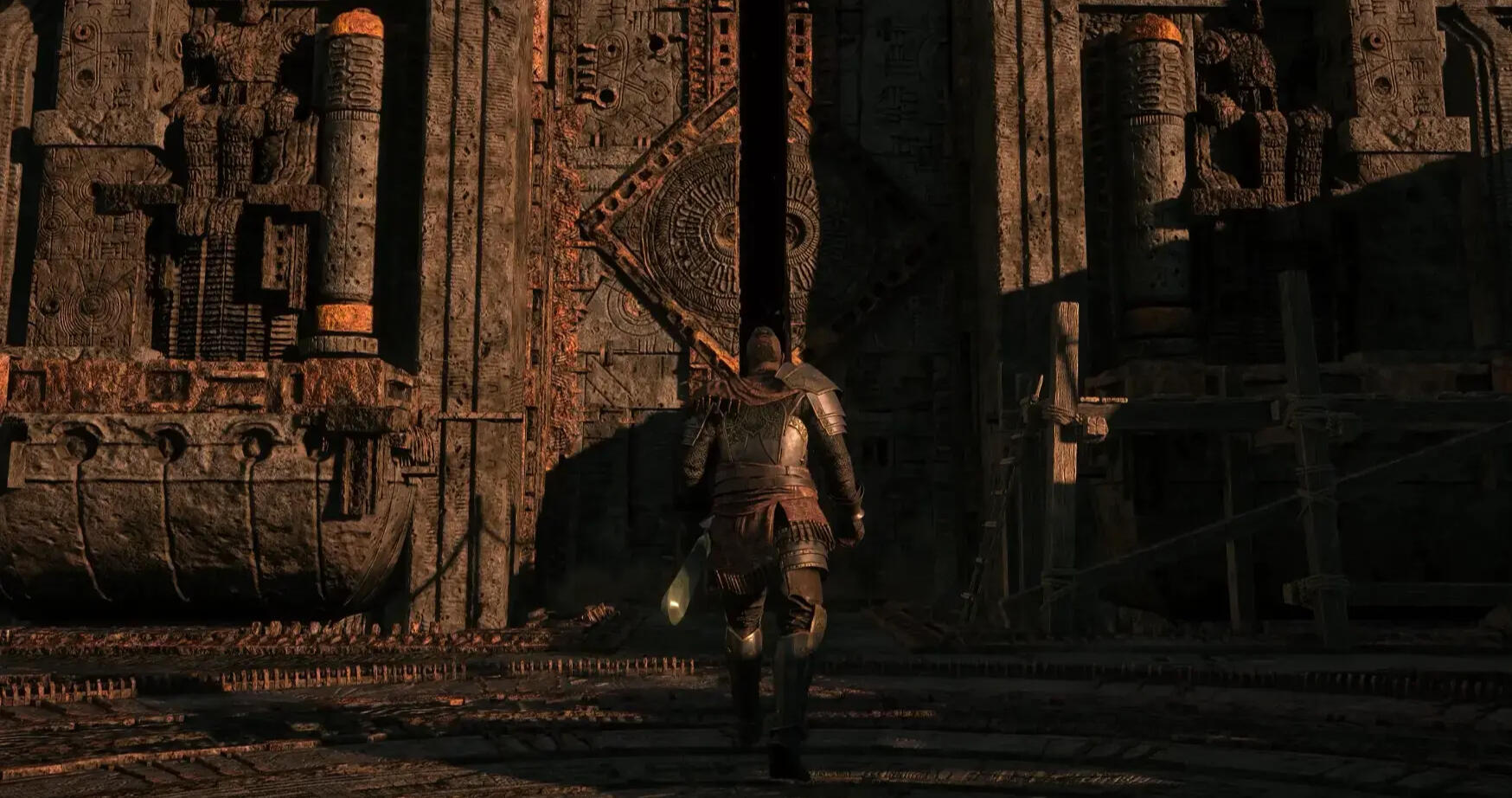
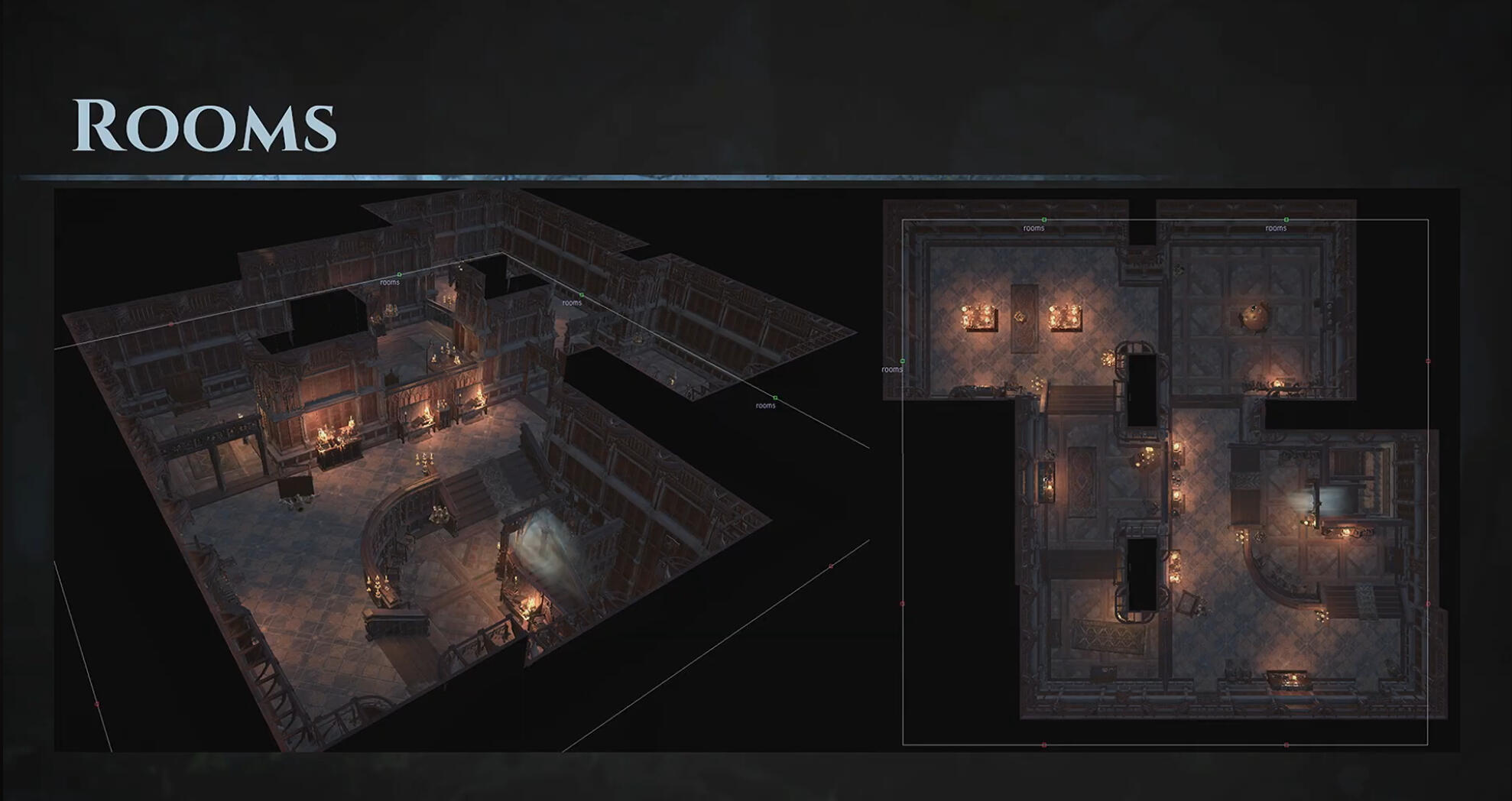
Before getting into anything ARPG-specific, it's worth stepping back to the more basic vocabulary any level designer works with, regardless of genre or camera: rooms and hallways, choke points, and open space, and how each of those shapes what a player experiences without them ever consciously noticing the shape doing it.A hallway is a promise. It tells a player there's exactly one way forward, and it compresses their attention onto whatever's directly in front of them — which is exactly why hallways get used as the setup before a reveal, or as the site of a choke point fight where the designer wants to guarantee how many enemies can reach the player at once.Rooms are places of interest, the classic locations for combat encounters, boss arenas and hidden treasures. Open spaces provide huge scale, and more perceived player agency — no walls funneling the decision at all, just terrain, distance, and whatever the player brings to it.
Boss arenas are often some of the most interesting and fun spaces to design. Traditionally, a boss fight almost always wants the clarity of a room — a bounded, legible space where the designer can guarantee visibility and fairness — but the best boss arenas resist the temptation to make that space totally featureless. Path of Exile 2's Act 3 Boss the Mighty Silverfist (known simply as Monkey to most) is a genuinely good example of this. He's fought in the Temple Ruins, a large stone courtyard set within the otherwise dense, tree-choked Jungle Ruins zone — so structurally, it's an open space, not a sealed room. But it isn't empty: the courtyard is scattered with broken architecture that shows players the footprint of a boss room in that open space. Silverfist's whole kit is telegraphed melee: a wide horizontal pillar sweep, an overhead slam that sends a shockwave forward in a straight line, an unpredictable dash. None of it is unavoidable through positioning alone in a truly empty field — but the scattered ruins give a player something to break line of sight behind, or to bait a slam into, turning a fight that could have just been "dodge roll on cooldown" into one where reading the terrain is itself a skill.
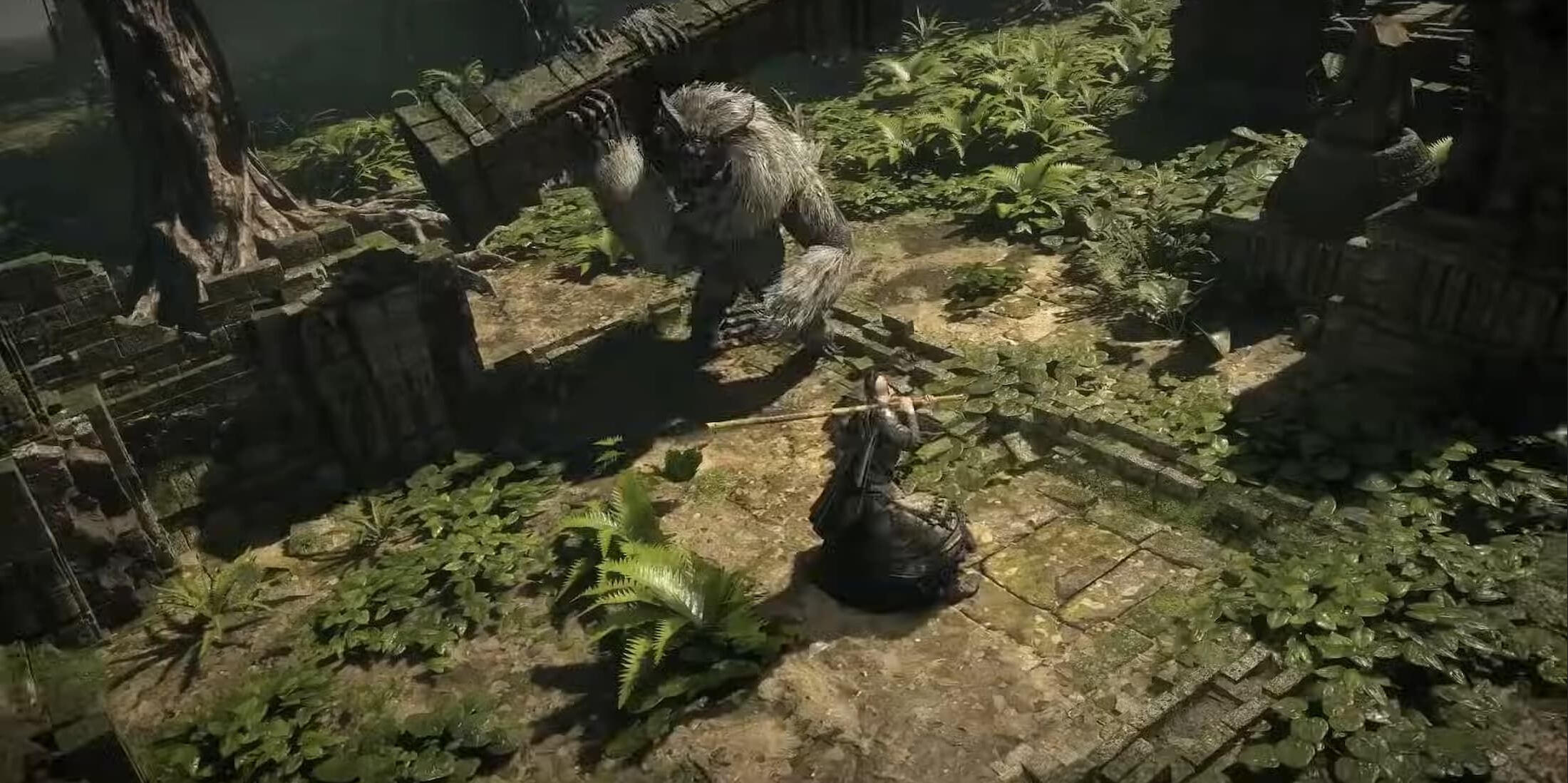
That's the general principle underneath the ARPG-specific points that follow: rooms, hallways, and open space aren't neutral containers you drop combat into after the fact. Each one changes what kind of decision the player is being asked to make, and events like Boss Arenas or League Mechanics create the most options in design space — how much clarity do you want to guarantee, and how much do you want the space itself to still matter once the fight begins?
Designing for Replayability: Event Layers in ARPG Worlds
I mentioned Events, and those are a huge part of the ARPG Level Design language. So much of what makes ARPGs replayable comes from something layered on top of the static spaces you create. A level can stay exactly the same shape and still feel completely different depending on what's happening inside it at a given moment, and modern ARPGs increasingly lean on this instead of, or alongside, redesigning the space itself.Diablo IV does this most visibly in Sanctuary's open world. Helltides transform an entire existing zone for close to an hour at a time — no new geometry, just escalated monster density, a new currency, and timed chests — turning a zone you might otherwise walk through quickly into somewhere worth camping. Legion Events are the opposite pace: a short, roughly four-minute burst of escalating enemy waves ending in a single big fight, dropped into a random spot on the map every twenty-five minutes or so. Neither required building a single new room. Both completely change what the existing space is for, on a schedule the player has to actually track and plan around.Path of Exile 2's Trials of Ascendancy take a related idea and turn it into its own self-contained level type. The Trial of the Sekhemas is a gauntlet of connected rooms where the player picks their own path forward — choosing which room to enter next based on its stated risk and reward — while managing a depleting resource that punishes bad choices along the way. It's effectively a small roguelike dungeon bolted onto an ARPG's endgame, and it's a clean example of event design and level design fully merging: the "level" only exists because of the choice-driven event structure sitting on top of it.
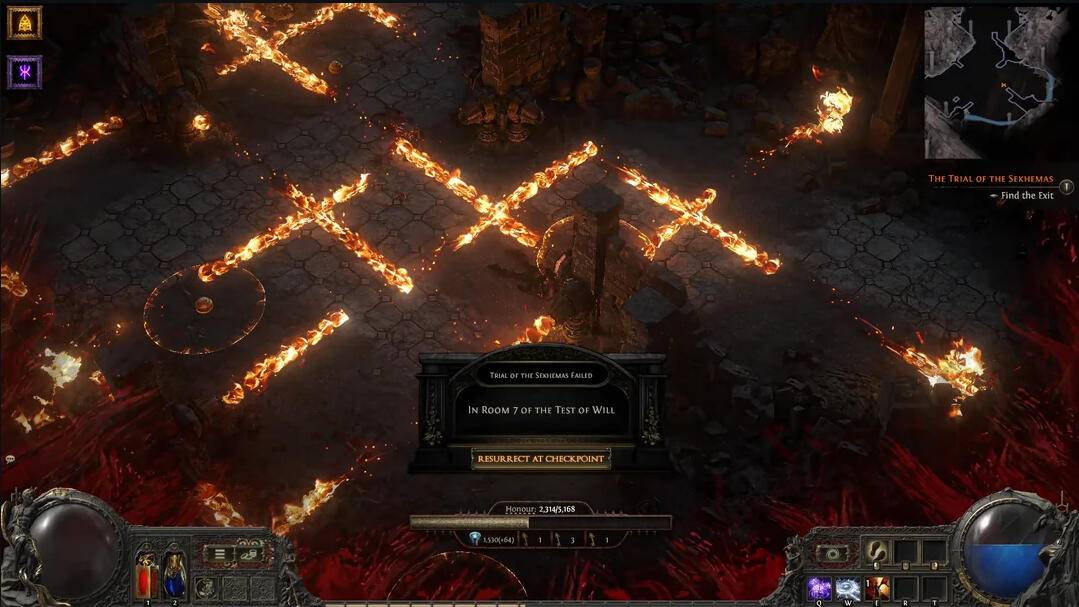
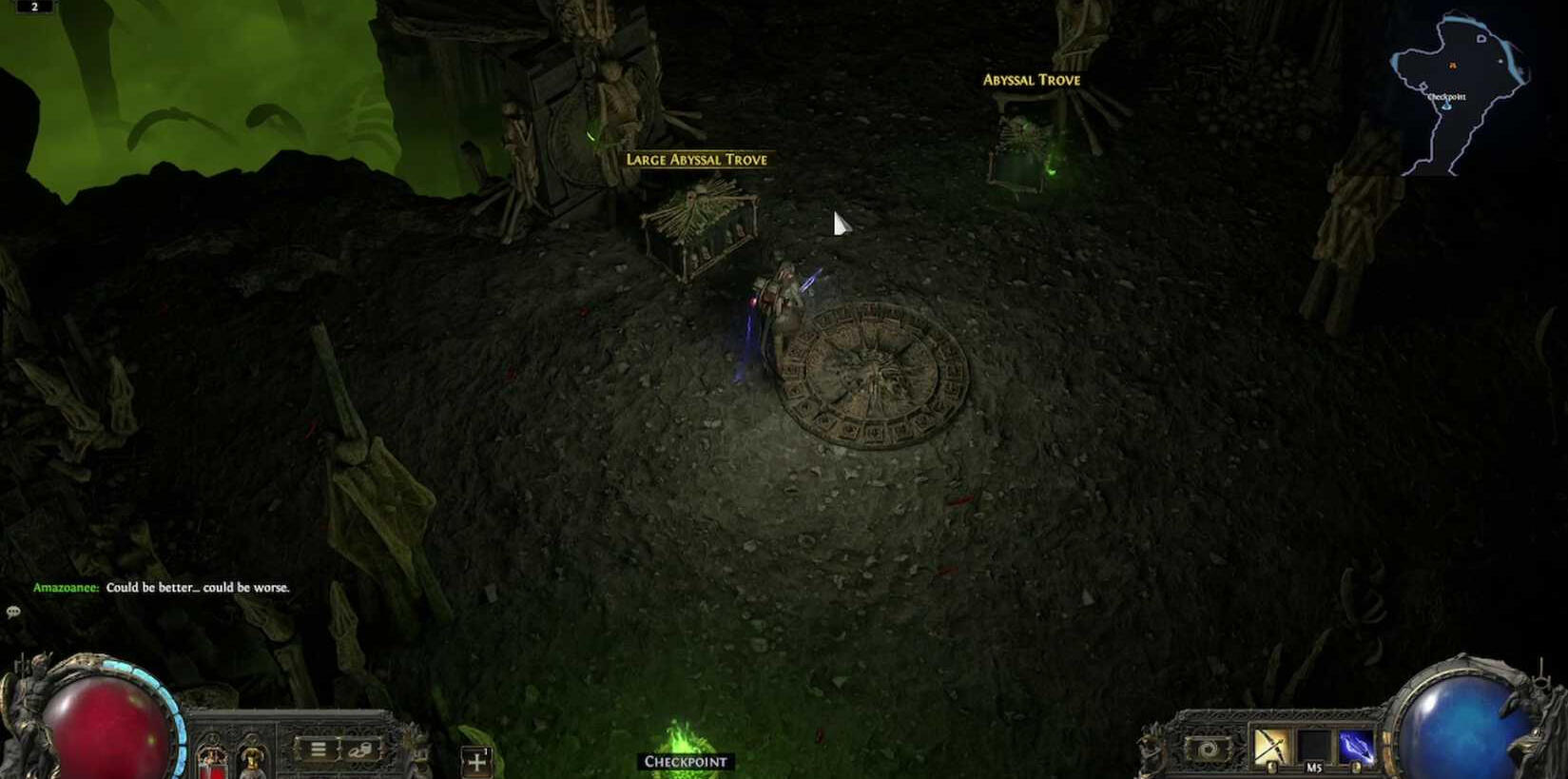
And Path of Exile's league mechanics might be the purest version of "the level didn't change, the event did." Ritual altars drop a fixed circle onto whatever ground you're already standing on, resurrect nearby dead monsters in escalating waves, and then let you spend the tribute you earned on a reward — the terrain is whatever the map already gave you, but the addition of "you may not walk outside this ring" instantly turns ordinary ground into a mechanically meaningful boundary. Abyss works from the opposite direction: cracks tear open and physically travel across the existing map, dragging the player along a path they didn't choose and wouldn't have walked otherwise, ending in a pit that can spawn special loot, challenging enemies, or portals into a whole other zone unique to that mechanic. Neither touches the underlying level geometry at all. Both completely reshape how that geometry gets used, for as long as the event is active.The lesson underneath all of this, I think, is that level design doesn't stop at the geometry. Especially in an ARPG, where players are expected to replay the same spaces dozens or hundreds of times, an event system is one of the most efficient tools available
Level design decides how players find loot, not just how much they get
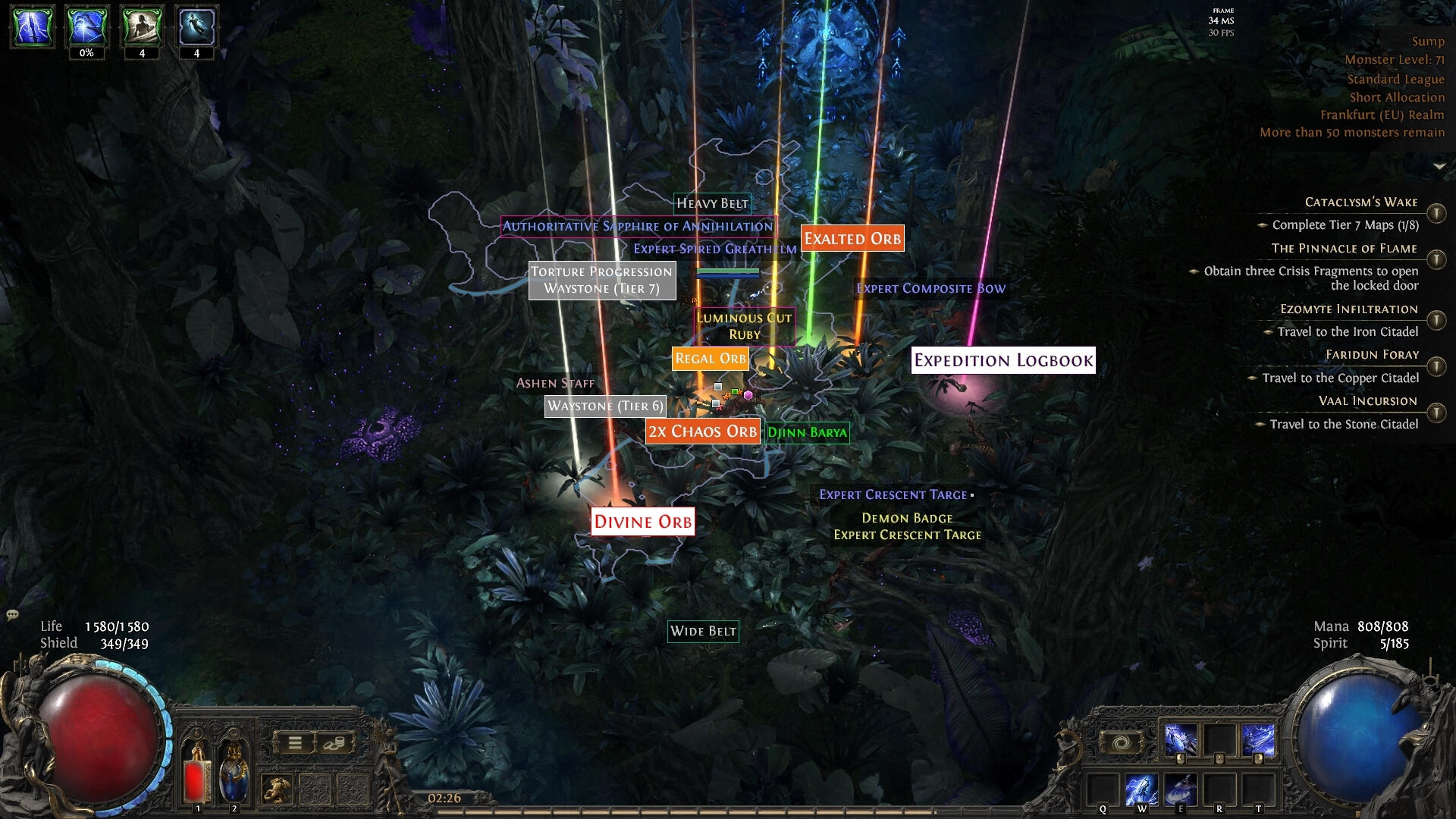
Action, Adventure and Role Playing Games traditionally design levels to hide loot and leave it up to the player to explore and find it. Based on the game you want to make, you cand decide whether the level should surface loot passively, gate it behind exploration, or guarantee it outright. Isometric ARPGs split into genuinely different answers here.Games like Path of Exile and Diablo generate so much loot that the design problem is closer to the opposite of hiding: highlighting the handful of drops that matter out of a pile that doesn't. Rarity-tiered glow effects, on-screen loot filters, and distinct pickup sounds all exist to solve "how do I make the good item visible in this clutter," not "how do I make the player search for it."Where Path of Exile does hide things, it's deliberate and separate from the main drop stream: certain Treasures sit in concealed rooms behind switches or triggered walls, discoverable only by exploring off the critical path. The Act 1 Chemist's Strongbox — sealed behind a hidden mechanism just before a story boss — is a good example: it's optional, requires noticing a detail most players will run past, and rewards that attention with useful early flasks rather than being essential to progress.Path of Exile 2 adds a third layer on top of both of these: guaranteed campaign rewards. Certain named encounters and hidden caches are coded to always drop specific things — an Uncut Skill Gem, a Support Gem, a flask upgrade — the first time you find them, regardless of how the game's normal randomized drop tables are behaving for you that run. This is a levelling-design decision as much as a loot decision: it puts a floor under how unlucky a new or returning player's build can be by a given point in the campaign, independent of whatever the random number generator has or hasn't given them.
Divinity: Original Sin 2 solves a related problem completely differently, because it isn't managing loot at Diablo's volume. With far fewer, more individually meaningful items, DOS2 places valuable gear and NPCs behind actual traversal or ability checks — a locked door needing a key found elsewhere, a chasm needing levitation or teleport — so the "gate" is a puzzle the level poses rather than a probability the drop table controls. That works specifically because DOS2 doesn't need a filter to manage volume; every item is rare enough to be worth building a small puzzle around.Placed side by side, these approaches show that the same top-down camera supports very different loot philosophies. Some games surface an overwhelming stream of loot and let the player (and their loot filter) do the sorting. Some games layer a small, deliberately hidden secondary stream on top for players who explore. PoE 2 adds a guaranteed floor to protect against bad luck; and DOS2 skips volume entirely in favor of hand-placed, puzzle-gated significance.
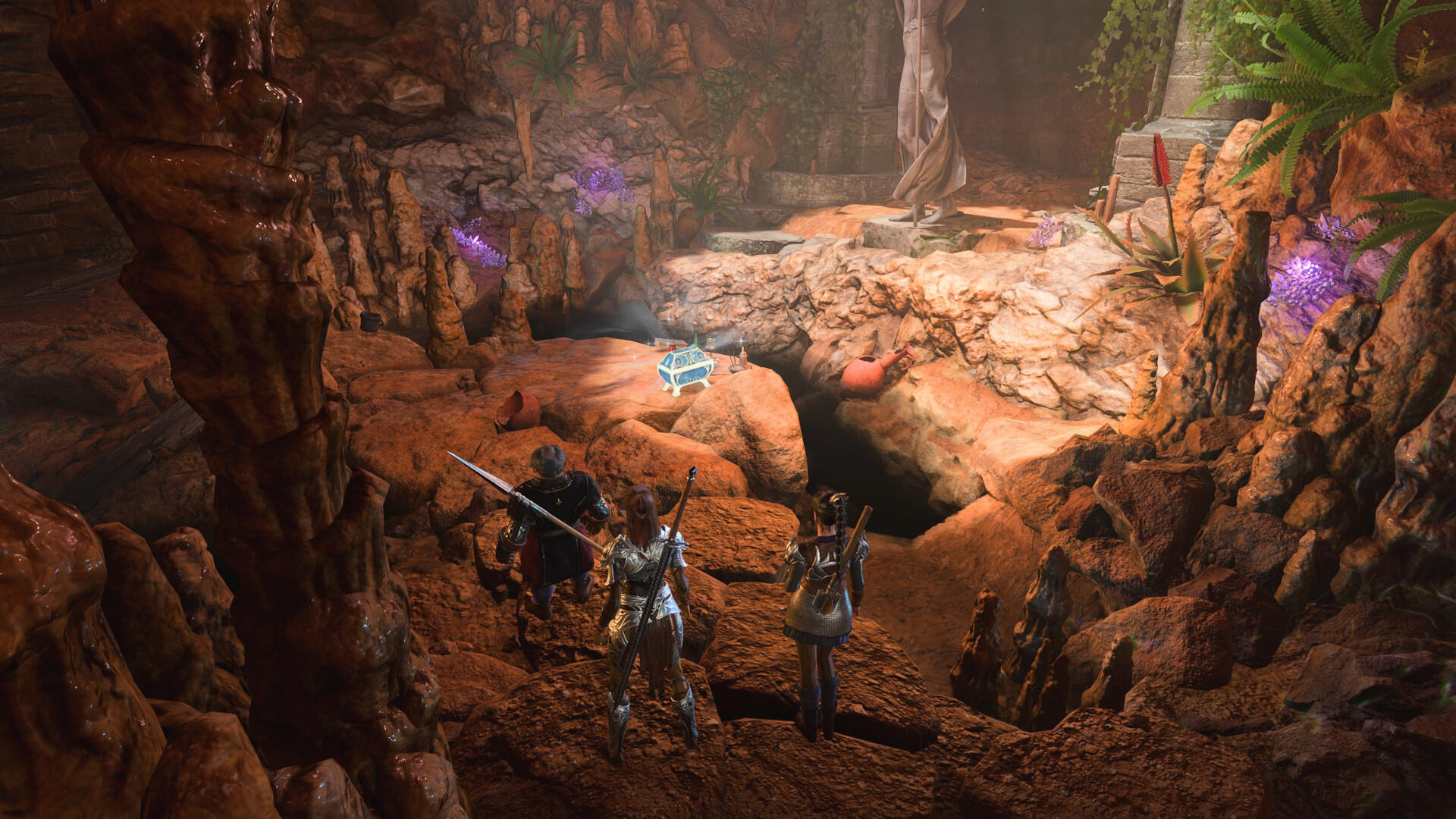
Three structural answers to the same problem: procedural, handcrafted, and persistent open world
More than any other camera perspective, isometric ARPGs are built around procedurally recombined or player-directed modular content, because the top-down view makes room-to-room transitions and tile seams far less visually intrusive than they'd be at eye level. Path of Exile's map/Atlas system is the deepest example of this — a library of pre-built room and connector chunks recombined per map, refined over more than a decade of live content. Diablo's randomized dungeon layouts run on the same underlying idea.Baldur's Gate 3, Divinity: Original Sin 2, and No Rest for the Wicked, by contrast, are almost entirely hand-authored. Larian places every barrel, chasm, and dialogue trigger with a specific tactical situation in mind. Moon Studios goes further with No Rest for the Wicked's world, Isola Sacra, which is built as one continuous, interconnected map rather than discrete instanced levels — shortcuts, hidden paths, and vertical routes are all hand-placed and permanent, closer to a Souls game's world design than to a typical ARPG's zone structure, just viewed through a fixed isometric-style camera.
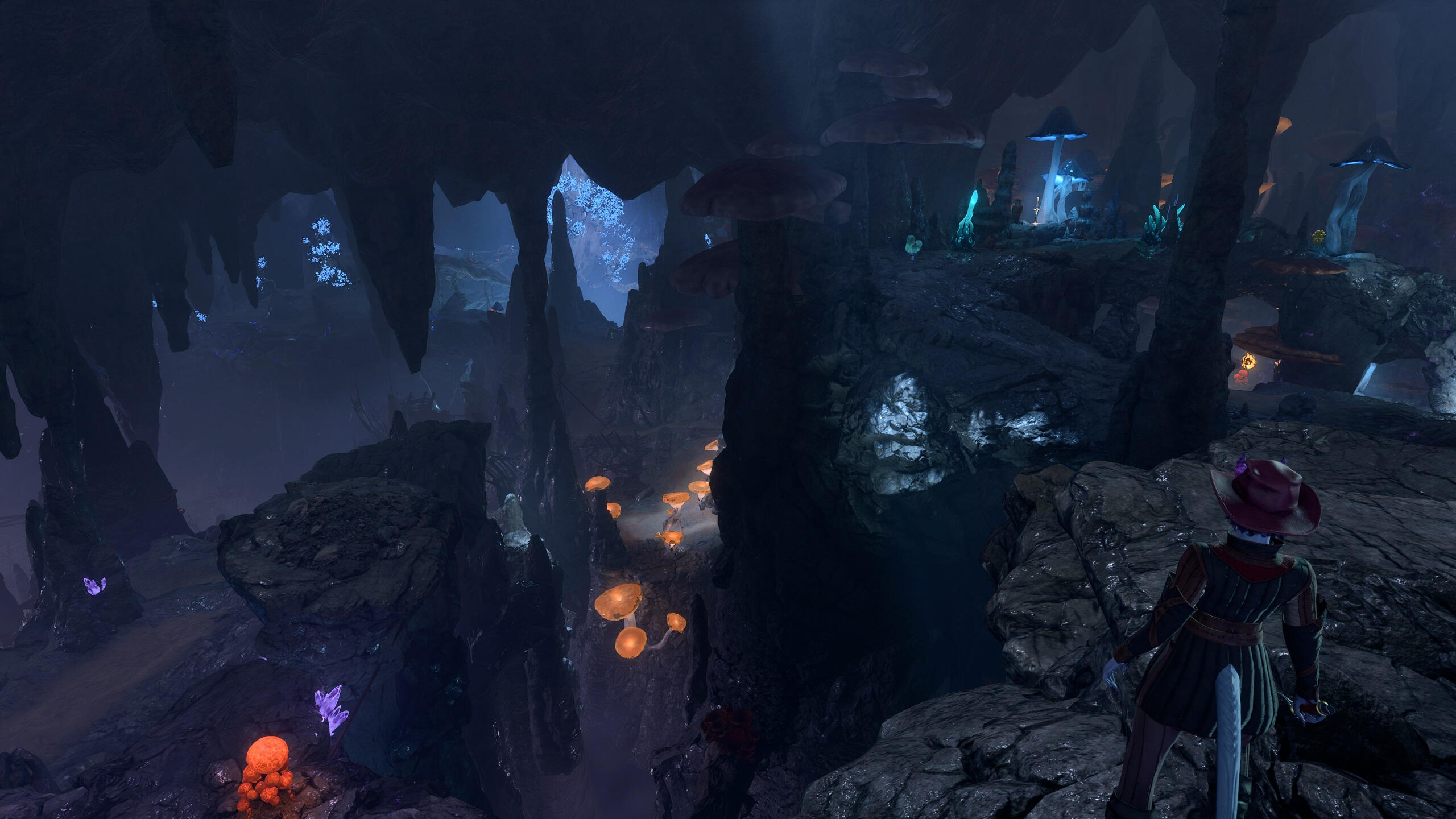
Diablo IV adds a genuinely third structural answer that doesn't fit neatly into either category: a persistent, shared open world. Sanctuary is a single, mostly hand-authored overworld — closer to an MMO zone than a Diablo dungeon — that other players are physically present in, with world events, roaming bosses, and strongholds seeded across it, while the actual dungeons and Nightmare rifts branching off that overworld remain instanced and, in many cases, still procedurally generated underneath. It's a hybrid in a different sense than Grim Dawn's static-zone-plus-light-randomization approach (point 8, below): rather than randomizing details inside a fixed layout, Diablo IV keeps the top-level world entirely fixed and hand-built, and pushes all of its procedural and replayable content down into the instances hanging off of it. That's a meaningfully different design problem than either pure procedural generation or pure hand-authoring — the level designer has to make a large, persistent, multiplayer-visible space feel alive and worth traversing repeatedly, which is closer to an MMO zone designer's problem than a traditional ARPG dungeon designer's.The comparison across all three is instructive: procedural isometric spaces (Path of Exile, Last Epoch, Diablo's instanced content) optimize for infinite replayability at the cost of bespoke moments; hand-authored isometric spaces (Baldur's Gate 3, Divinity: Original Sin 2, No Rest for the Wicked) optimize for a memorable, precisely-tuned space at the cost of scale; and Diablo IV's persistent open world optimizes for a shared, social sense of place at the cost of the tight, hand-tuned pacing a fully instanced dungeon can guarantee. A single Larian encounter or a single hand-built stretch of Isola Sacra often does more design work than a dozen procedural rooms, but neither Larian nor Moon Studios could ship a game with the endgame breadth Path of Exile has — hand-authoring an infinitely repeatable Atlas isn't feasible at that level of bespoke detail, and it isn't the problem an open, persistent world is trying to solve either.
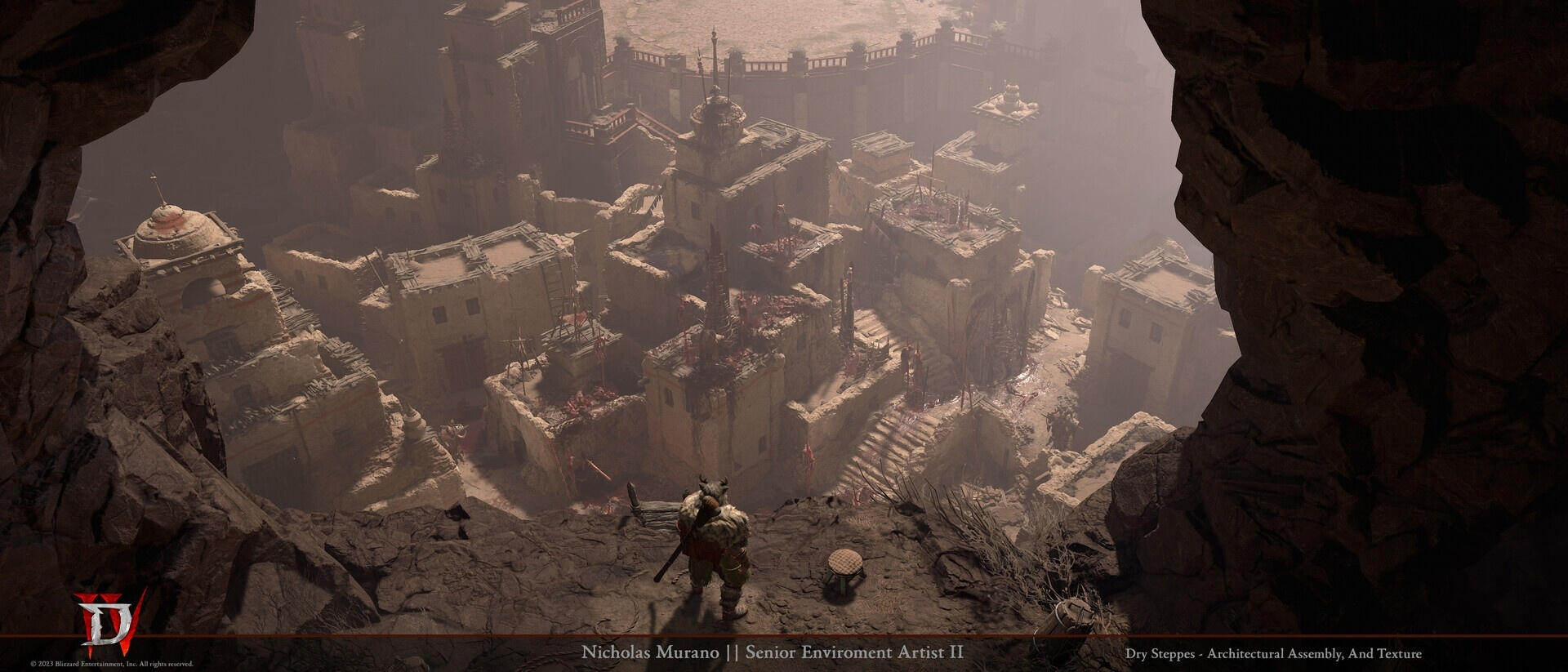
True verticality is the new frontier
The original ARPGs were not always made in true 3D Engines. Diablo I and Diablo II predate real 3D and used sprite layering and dithering to fake the appearance of elevation. Nowadays, games are really pushing what's possible in a genre of games that have traditionally existed mostly along a single plane.A fixed or narrow-range camera — the kind Path of Exile and Diablo both use — genuinely limits how much a player can perceive and act on elevation, even when the terrain is fully three-dimensional. You can't look straight up a cliff face to judge a jump, you can't tilt the camera to check what's directly below a ledge, and the game generally doesn't ask you to reason about height as a combat variable, even though the height is physically there in the level. The verticality gets used environmentally — for traversal, sightline-blocking, and visual variety — rather than mechanically.No Rest for the Wicked sits in a related but distinct spot: real 3D elevation, a camera with more freedom than PoE or Diablo's, but verticality is used mainly for world traversal and exploration rather than combat math. Spelunking crypts, mountain passes, and layered vertical shortcuts built directly into Isola Sacra's hand-authored world make it closer to a Souls game than other offerings in the genre.The interesting thing to think about is how this approach can be taken into procedural level building rather than the hand built worlds it's been used in so far.
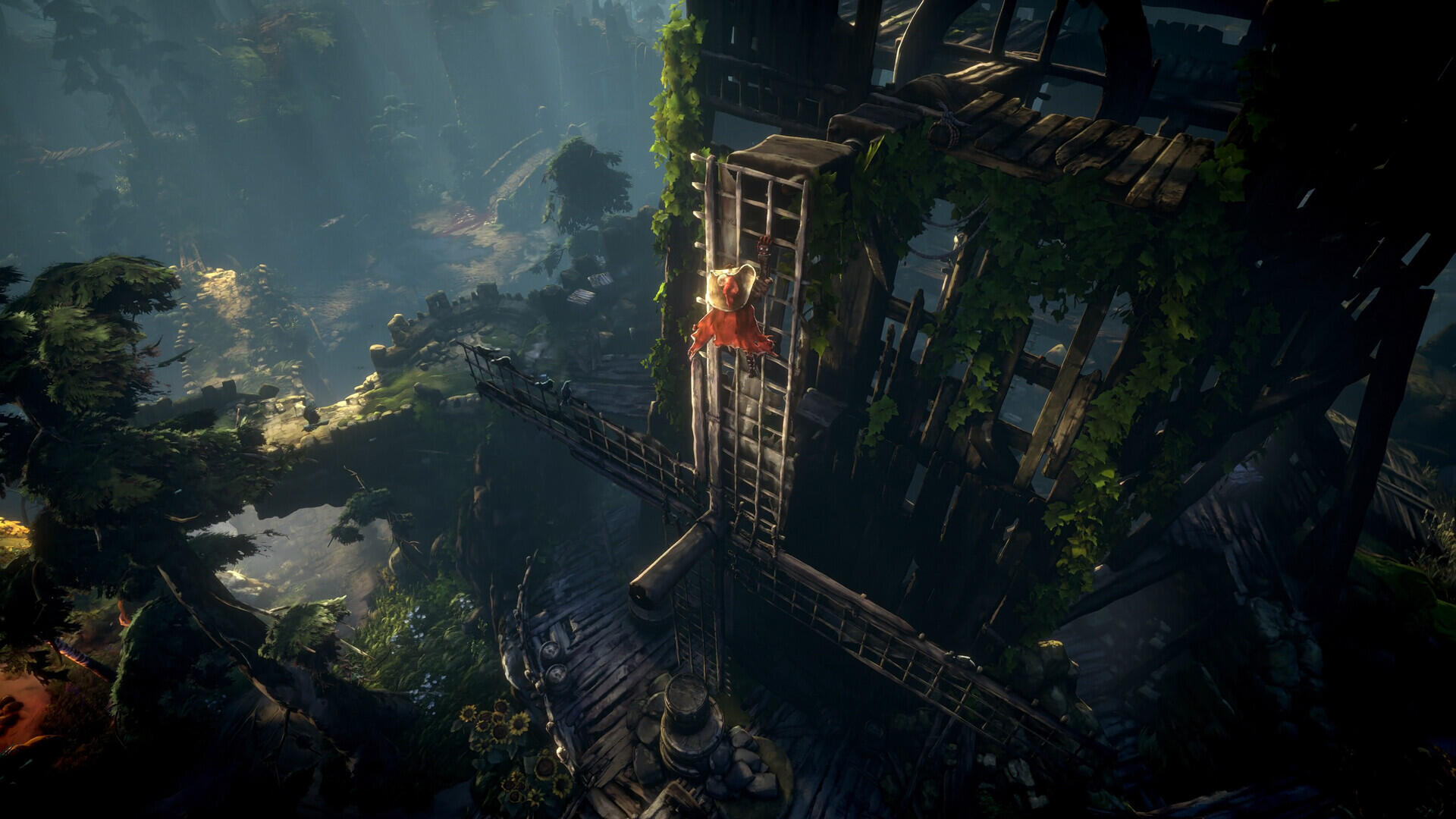
Elemental and surface interactions can turn flat ground into a tactical layer
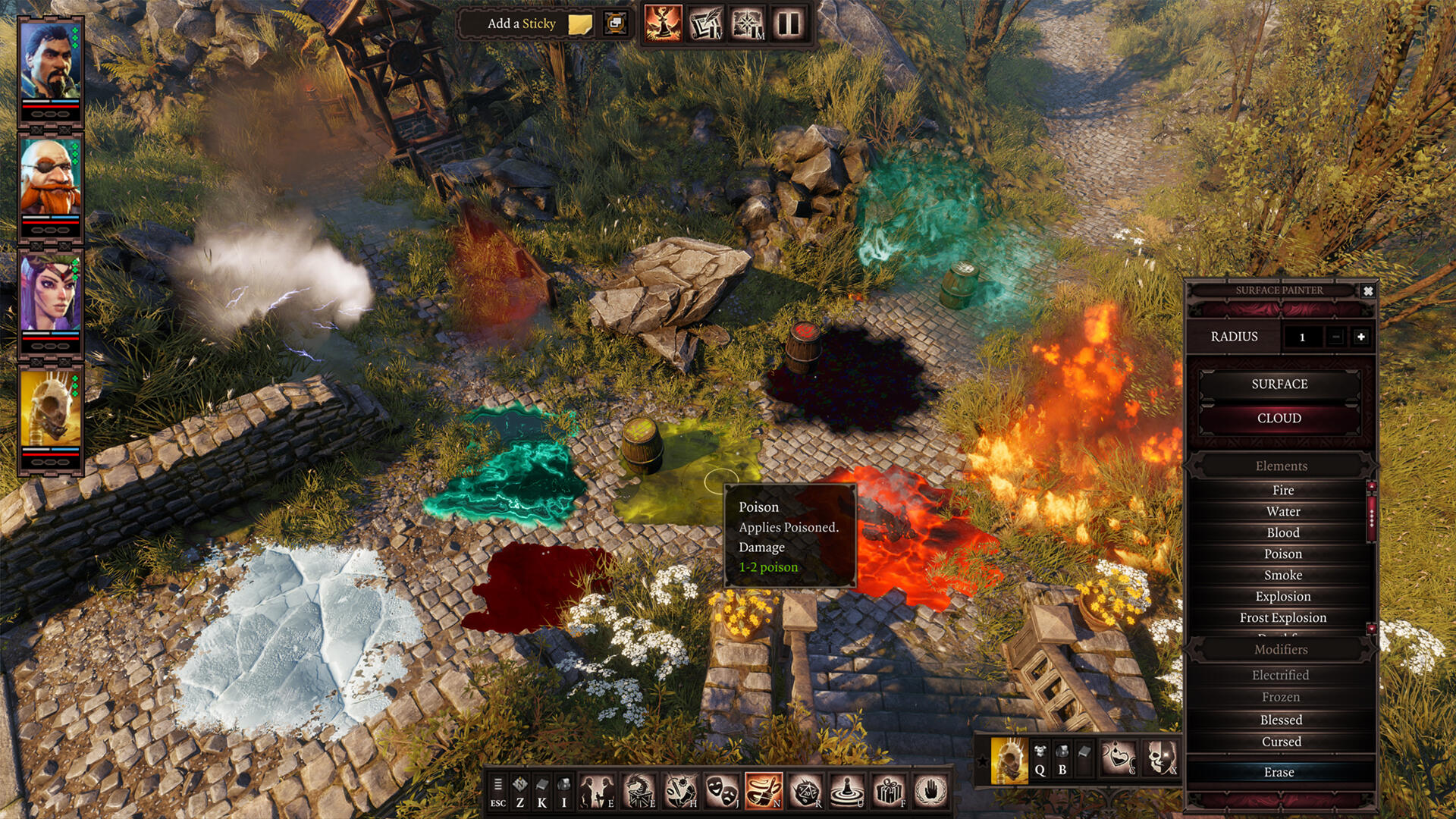
Because isometric levels are mostly played on a single visible plane, several of these games compensate for the lack of verticality by making the ground itself a tactical surface. Divinity: Original Sin 2 is the clearest case: fire spreads across oil, water conducts electricity, poison clouds can be ignited — the terrain is a chain-reaction system a player is expected to read and exploit before ever considering it "just the floor." Path of Exile's ground effects (caustic ground, consecrated ground, ignited ground from certain skills) serve a similar function at a smaller, faster-paced scale.Baldur's Gate 3 inherits this system almost directly from its Divinity predecessor, but layers it against verticality rather than instead of it — an oil surface at the bottom of a staircase becomes a different tactical problem than the same oil surface in an open room, because height and area effects interact.
Environmental Wayfinding
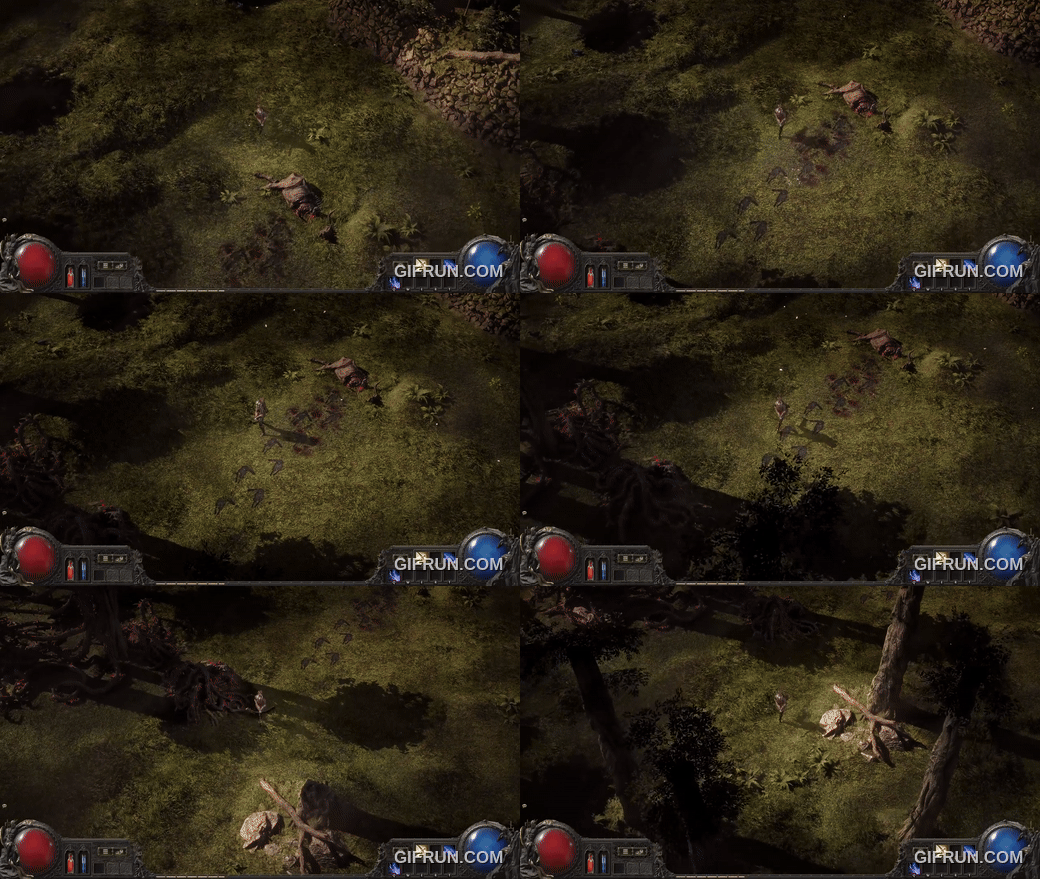
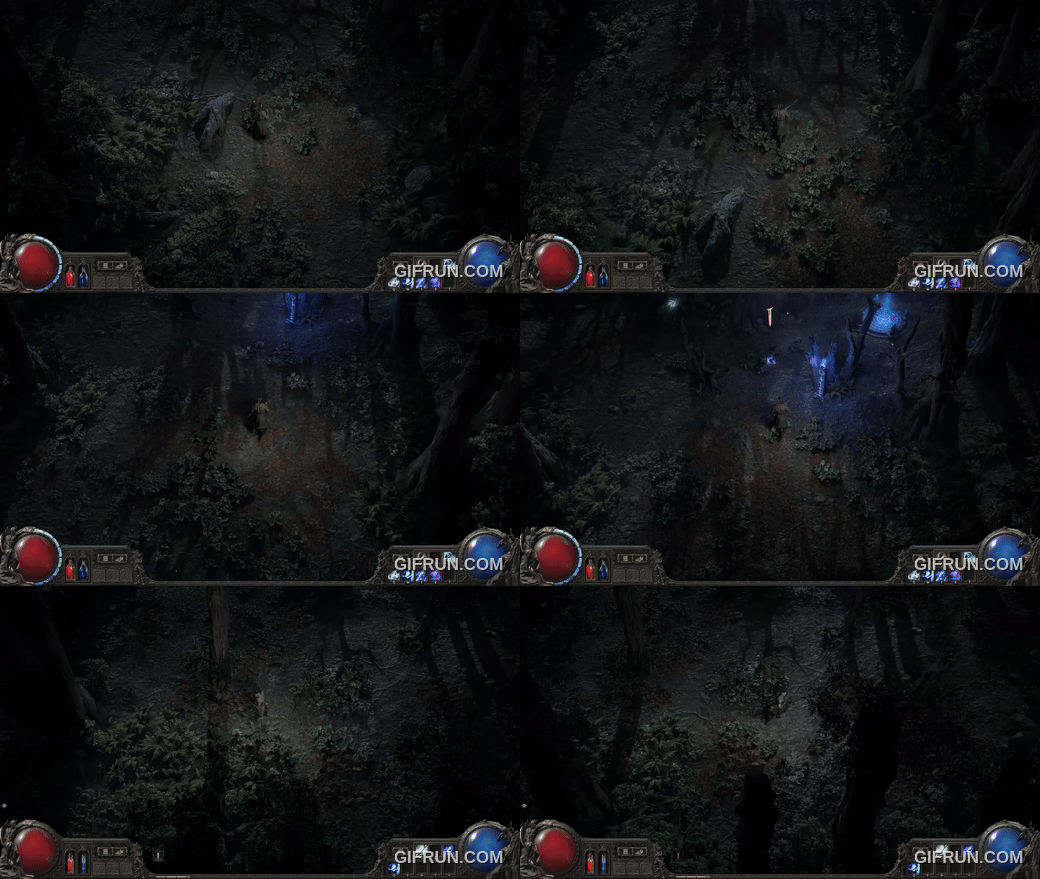
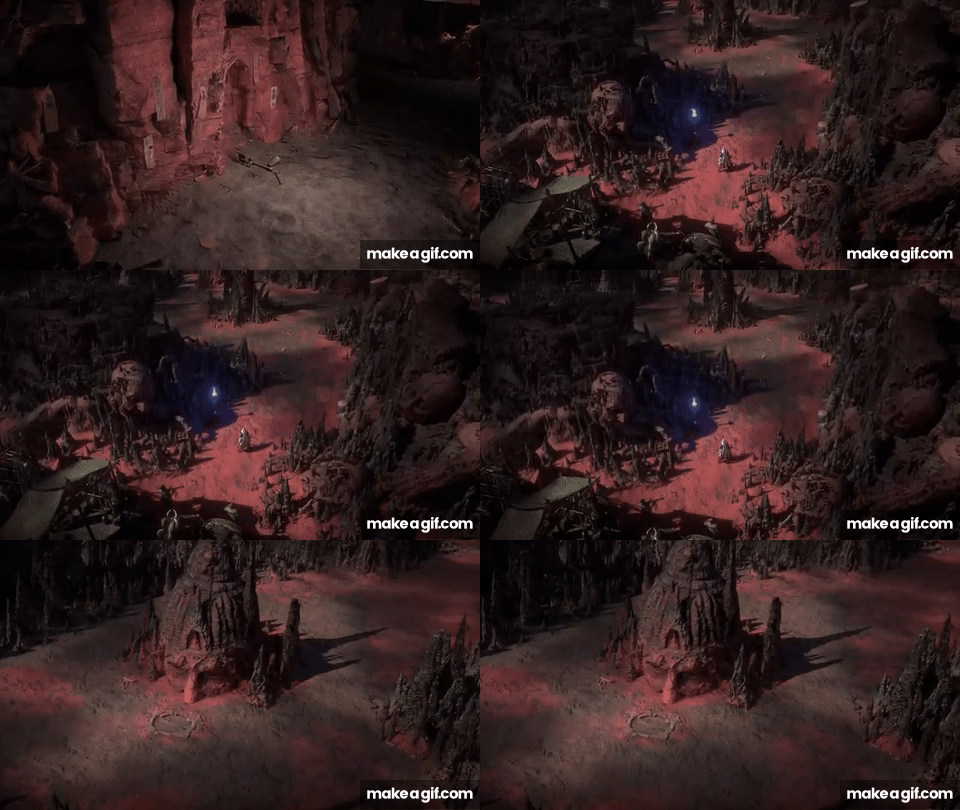
Large isometric zones create a navigation problem no other point above addresses: without a first-person camera's sense of "I've been walking this direction for a while," it's easy to lose orientation in a sprawling top-down space, especially one with multiple branching paths and no fixed landmarks. Path of Exile 2 ran into this directly. Its early campaign zones — Act 3's Drowned City and Utzaal in particular — were large, branching, and prone to dead ends, and player feedback consistently pointed to backtracking as one of the most frustrating parts of the campaign.Grinding Gear Games' response has been twofold. Some of it is pure layout surgery — later patches physically removed dead ends and shrank oversized zones like the Drowned City and Utzaal once the backtracking problem became clear. The more interesting response, though, is environmental wayfinding: subtle in-world visual cues that point toward the next objective without a waypoint arrow breaking immersion. In the Grelwood, glowing golden roots lead the player toward the Tree of Souls, while patches of mushrooms on the ground signal that the Grim Tangle entrance is nearby. Elsewhere in the campaign, trails of locusts spawned by ritual encounters lead toward the next encounter of the same type, and blood or slaughtered-cattle trails point toward specific bosses like the Crowbell. These are diegetic breadcrumbs — the fiction of the world doing the job a minimap arrow would otherwise have to do.It's worth being honest about what this represents: it's a good technique, but it's also a visible admission that the studio hadn't gotten zone scale and navigability right the first time. These cues were added well after launch, specifically in response to complaints, and they're concentrated in exactly the zones that were flagged as most disorienting — which means the underlying problem (are these levels simply too large and too branching for players to hold a mental map of them?) hasn't been fully solved so much as papered over with better signage. A visual trail is a genuinely useful tool, but needing one is also a symptom: if a level requires this much diegetic hand-holding to be navigable, that's a sign the layout itself is fighting the player before the fix is even applied. It's a good case study in something every level designer eventually has to sit with — sometimes the right answer to "players keep getting lost here" isn't a wayfinding layer bolted on afterward, it's admitting the space itself needs to be smaller, more linear, or more legible in the first place.
Putting it together
Everything above is about what a finished level communicates. This section is about how it actually gets built — because the isometric ARPG genre has developed some of the most interesting blockout thinking in the industry, precisely because it has to solve the same layout problem twice: once by hand, and once by algorithm.Handcrafted blockout: a static world with just enough randomness layered on. Grim Dawn is the clearest isometric ARPG example of this, and it's a genuinely different approach from BG3 or DOS2's fully deterministic hand-authoring. Crate Entertainment builds Cairn's zones as static, permanently hand-placed layouts — but layers light randomization on top of that fixed geometry between play sessions: a bridge or road might be blocked by a burning wagon this run and clear the next, a cave entrance might shift position, and monster packs and quest objectives can spawn in different specific spots within the same hand-built space. The blockout itself never changes — only which of several pre-authored variations of a given detail is active. It's a middle path between "fully static" and "fully procedural": the designer gets full control over the shape of the world and can guarantee it's readable and well-paced, while still getting some of procedural generation's replay benefit, because the exact obstacles and encounters shift slightly each time you pass through. No Rest for the Wicked's Isola Sacra pushes further toward the fully deterministic end of that same spectrum — one continuous, entirely hand-placed world with permanent shortcuts and vertical routes, no randomized elements at all, closer to a Souls game's philosophy of "every playthrough should be able to be discussed as the same specific space."
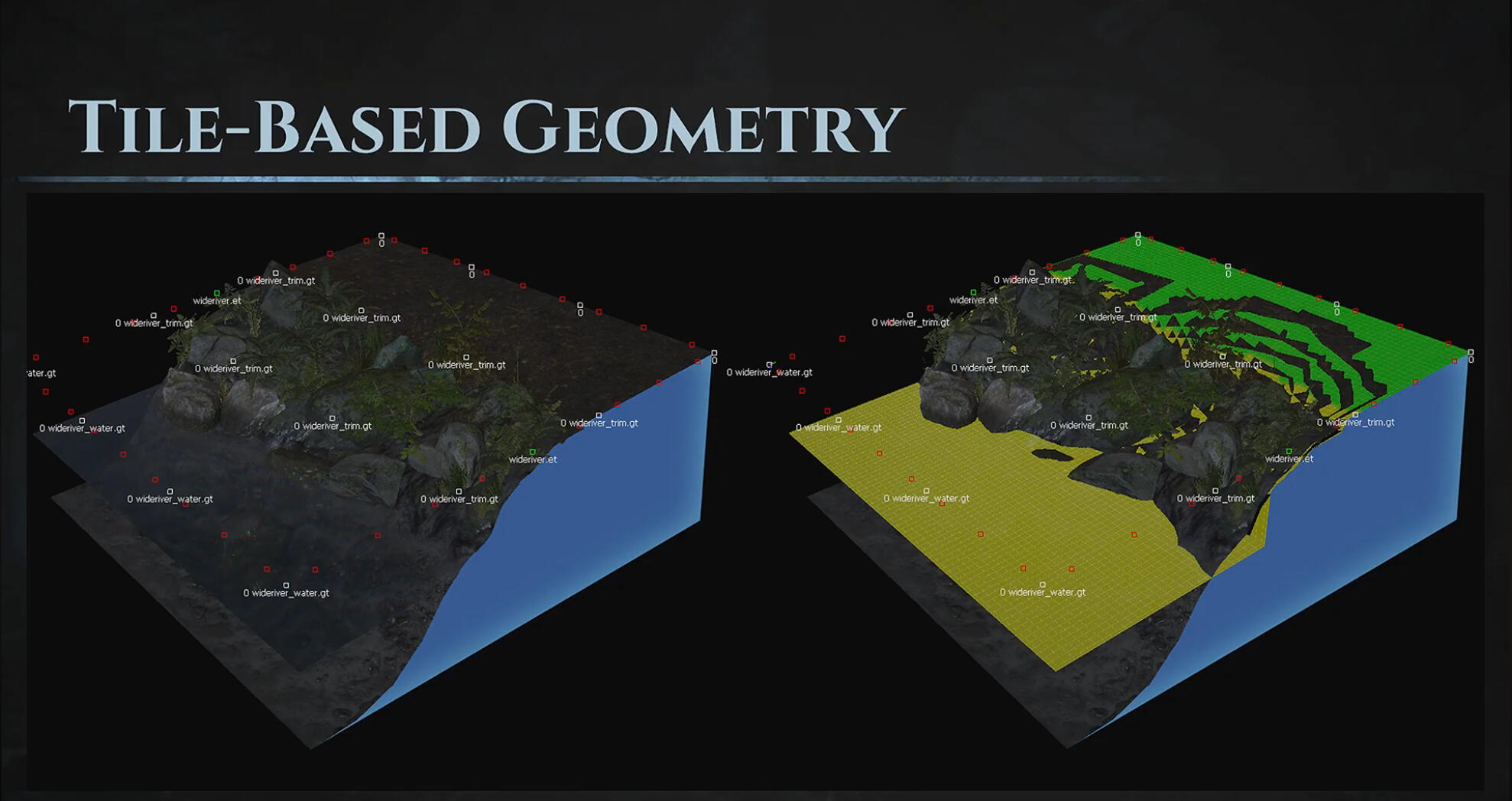
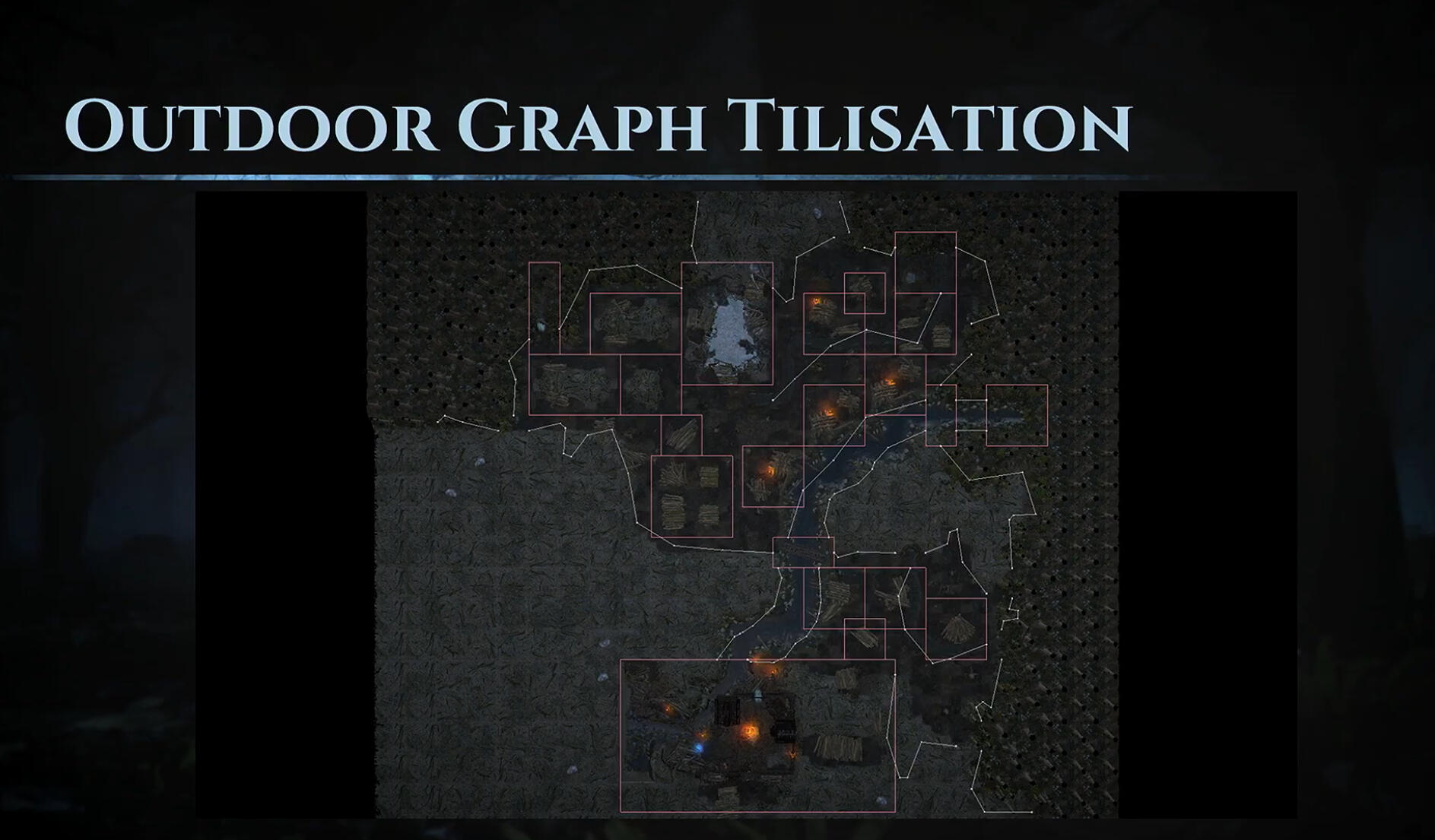
Procedural blockout: the chunk is the design. Grinding Gear Games' senior programmer, Rhys Abraham, broke down PoE's actual area-generation system at ExileCon 2019, and it's a more sophisticated technique than the simple "snap chunks together at fixed sockets" model most procedural dungeon generators use. PoE builds its levels from a library of hand-designed rooms — full authored spaces, not just corridor segments — each tagged with tile keys that describe what kind of geometry is allowed to border them (a cave wall, a water's edge, a cliff face). Instead of placing these rooms edge-to-edge like puzzle pieces, the generator allows rooms to overlap as they're placed, then uses the tile-key rules to resolve the overlap — deciding which sections merge, get cut away, or get blocked off. The result reads as a far more organic, natural layout than a strict grid of connector pieces would, because the generator isn't just choosing which pre-approved shape fits next, it's actively reconciling two authored spaces into one coherent one.Diablo's series shows an earlier, more straightforward version of the same underlying idea, and it's worth understanding as the historical predecessor PoE's system improved on. Diablo I stitched hand-built "minisets" — small pre-authored room fragments like a specific altar layout — into an algorithmically-subdivided skeleton. Diablo II made the hand-authored chunk the primary unit: Act I's caves alone are built from 95 distinct hand-designed room presets that the generator recombines into a different layout every run. Diablo III formalized this into what the community calls the tile system: fixed-size, fixed-shape chunks with defined connection sockets on their edges, picked and stitched together by a generator that's solving a pure graph-matching problem rather than touching any geometry itself. All three are real, useful techniques, but they all still fundamentally place discrete, non-overlapping pieces — which is exactly the constraint PoE's overlap-and-resolve approach was built to get past.Path of Exile's endgame Atlas runs on this same overlap-and-resolve engine at a much larger scale, which is precisely why the game has been able to sustain meaningfully fresh content for well over a decade without a design team hand-placing every square meter of it.
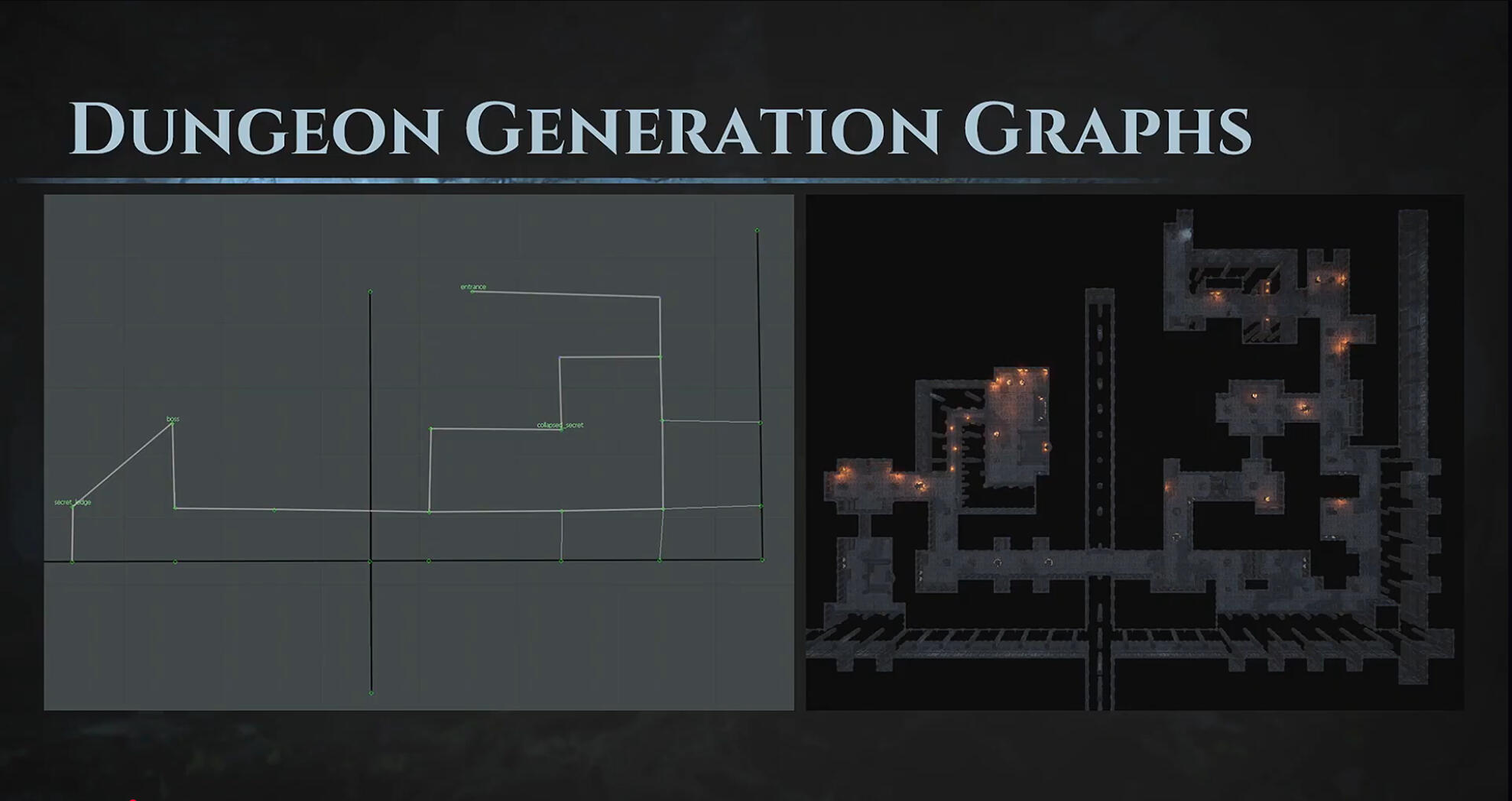
The open question even PoE's system hasn't fully solved: designing the graph before the geometry. Rhys Abraham's talk is honest that this system guarantees local compatibility — any two adjacent rooms will always resolve into something coherent — but it doesn't, by itself, guarantee global structure. It can't promise "the boss room is always exactly three combat encounters from the entrance" or "there is always a shop room at the midpoint" the way a designer manually laying out a dungeon by hand can. The more modern evolution being explored elsewhere in the industry — used in newer procedural generation tooling and increasingly in AAA and indie roguelikes alike — is to define an abstract level graph first, completely independent of any geometry ("the boss room connects to two combat rooms, one of which branches to an optional shop"), and only then fill each graph node with a compatible pre-authored chunk. That would let a designer guarantee pacing and critical-path structure while still getting full geometric variety underneath — hand-authored intent baked into the skeleton instead of resolved locally, piece by piece, after the fact.That distinction is exactly the seam I think Path of Exile 2's wayfinding problem is running into. A room-and-tile-key system, by design, doesn't guarantee that "the path to the Tree of Souls is short and legible" — it only guarantees that adjacent rooms fit together sensibly. When GGG added guaranteed intersections (Traitor's Passage always splitting toward a specific NPC on one path) and landmark-based objectives (Titan Valley's colossal heads marking dungeon entrances), they were effectively retrofitting graph-level guarantees onto content that wasn't originally built with that structure in mind — patching the connective layer after the fact rather than designing it in from the start. It's a strong argument that the tools and conventions for designing how chunks connect at the macro level — the graph, the pacing guarantees, the "you will never be more than N branches from the objective" rules — are still less mature across the genre than the tools for designing the chunks themselves, even in a system as sophisticated as PoE's. Handcrafted levels solve this by having a human hold the whole graph in their head as they place every piece by hand; procedural levels, even the best ones, are only now starting to catch up to doing that deliberately, instead of resolving everything locally and patching the worst global outcomes after launch.
None of This Holds Up Without Testing the Real Thing
Every point above is a design intention. None of them survive contact with real play automatically — they only hold up once someone actually plays the finished camera, at real speed, under real combat load, and the gap between intention and result gets checked directly.The clearest version of this is density and readability under load. A pack size and layout that reads as "epic swarm" in a design document or a static screenshot can read as pure noise once real particle effects, screen shake, and several overlapping ability animations are firing at once — the same problem point 1 is about, but only visible once the fight is actually running. Path of Exile's own endgame has been rebalanced around exactly this, repeatedly, as build power and on-screen effects have crept up across a decade-plus of live updates: what was legible five leagues ago can stop being legible once players push more damage and more simultaneous effects through the same space.The same is true of navigation, loot visibility, and verticality — point 6's wayfinding cues only got added once real players, not design documents, proved that the Grelwood and the Drowned City were actually disorienting; a Diablo tile or a Grim Dawn zone only proves it's well-paced once a real character walks it at real move speed. An isometric camera shows more of the board than almost any other perspective, which is a real advantage — but that advantage only pays off if what's shown stays legible in motion, and the only way to know that is to load the actual fight, not the blockout, and watch it get messy.
Closing Thoughts
If you've read this far, you're either a huge nerd like me, or have real masochistic tendencies. Either way, thank you for taking the time, I hope this has given you some new ways to think about level design in ARPG's. I know this list isn't anywhere close to finished. Isometric ARPGs in particular still feel like a genre with real unsolved problems in it — Path of Exile 2's ongoing struggle with zone navigability is one very visible example, but I don't think it's the only one. Loot visibility at scale, how much verticality an isometric camera can meaningfully support before it stops paying off, how to design the global structure of procedural chunks as deliberately as PoE already designs their local connections, and how a persistent open world like Diablo IV's should even be evaluated against instanced design at all — these all feel like open questions rather than solved ones. I like that. It means there's still real design work left to do here, not just execution of a known formula, and it's exactly the kind of problem I want to keep spending my career digging into.
To learn more about the games I've made or inquire about working together, please reach through the link below.